Deep-frying onions yields a crispy texture and a rich, aromatic flavor, making them a common ingredient in snack foods, seasonings, and culinary applications. Depending on the production method, onion frying primarily employs one of two techniques: traditional atmospheric frying or vacuum frying. Although both processes utilize edible oil for heat exchange, differences in operating environments result in significant variations regarding frying temperatures, processing times, and final oil content.
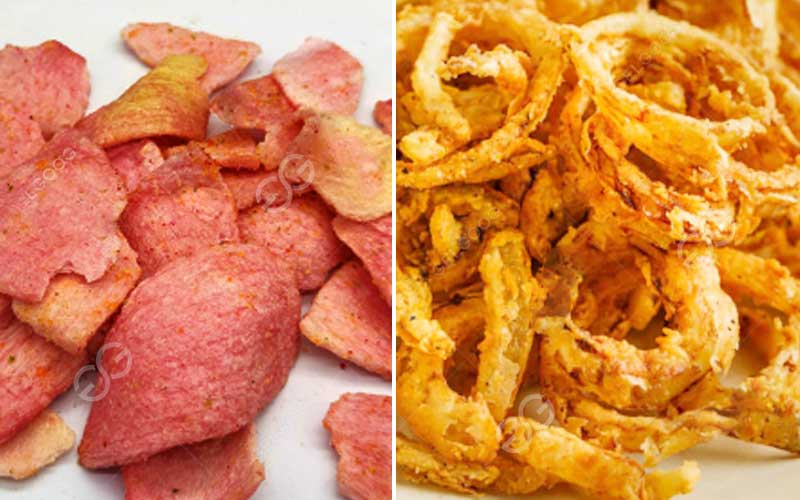
1. Differences in Working Principles
Normal Frying
Normal frying takes place in an environment close to atmospheric pressure. After undergoing preliminary processing—such as slicing—the onions are immersed in high-temperature cooking oil. The oil acts as a heat transfer medium, rapidly conveying heat into the onions; this causes the moisture within them to gradually evaporate while simultaneously creating a fried product with a crispy texture. During this process, moisture on the onion surface vaporizes rapidly first, followed by the continuous outward migration of internal moisture. As the moisture content decreases, the product’s structure becomes increasingly porous and crispy, and a certain degree of browning occurs.
Vacuum frying takes place in a sealed, low-pressure environment. The equipment utilizes a vacuum system to lower the pressure within the frying chamber, thereby reducing the boiling point of water. Consequently, the onions can undergo moisture evaporation and dehydration at lower oil temperatures. Because the product is processed in a low-oxygen environment, the onions have minimal contact with air, resulting in reduced oxidation. Furthermore, the lower processing temperature minimizes the impact of high heat on the onions’ color, aroma, and certain heat-sensitive components.
2, Variations in Frying Temperature
The normal frying of onions typically requires relatively high oil temperatures—generally adjusted based on the onion variety, slice thickness, moisture content, and product specifications—with industrial operating temperatures commonly ranging from 140°C to 180°C. Higher temperatures accelerate heat transfer, enabling rapid moisture loss and the formation of a crispy texture.
By lowering the pressure within the frying chamber, vacuum frying enables moisture to boil at lower temperatures; actual processing temperatures can typically be controlled within the range of approximately 70°C to 110°C.
3. The Oil Content Of The Finished Products Varies.
During the normal frying process, onions undergo dehydration in high-temperature oil. As the internal moisture content decreases, the product’s structural composition changes, potentially allowing some oil to penetrate the interior after removal from the fryer. Consequently, without an effective de-oiling step, the finished product may have a relatively high oil content. In industrial production, a de-oiling machine is typically installed downstream of the fryer to mechanically remove excess surface oil, thereby improving the final product’s oil content profile.
The oil content of vacuum-fried products is likewise influenced by the raw material structure, frying time, vacuum level, and subsequent de-oiling method; however, compared to traditional frying, vacuum frying can reduce oil content by approximately 20%.
4. How Should One Choose Between The Two Processes?
If a company primarily produces traditional fried onions—intended for use in burgers, salads, seasonings, convenience foods, or as foodservice toppings—and prioritizes output, processing efficiency, and equipment investment, the traditional continuous frying process is generally the more suitable choice.If, however, a company aims to develop premium, differentiated snack foods and places greater emphasis on low-temperature processing, color retention, flavor profile, and product added value, vacuum frying offers distinct advantages.