In regions such as Southeast Asia, fried shallots are a highly popular seasoning ingredient. Characterized by their crispy texture, they are widely used to garnish dishes ranging from rice to noodles. With the advancement of the food industry, the production of fried shallots has gradually transitioned from traditional artisanal methods to large-scale, standardized manufacturing. So, what is fried shallots made of?
Fried shallots are a ready-to-eat food product or seasoning prepared using fresh shallots as the primary ingredient, processed through a series of steps including peeling, slicing, deep-frying, and oil removal.
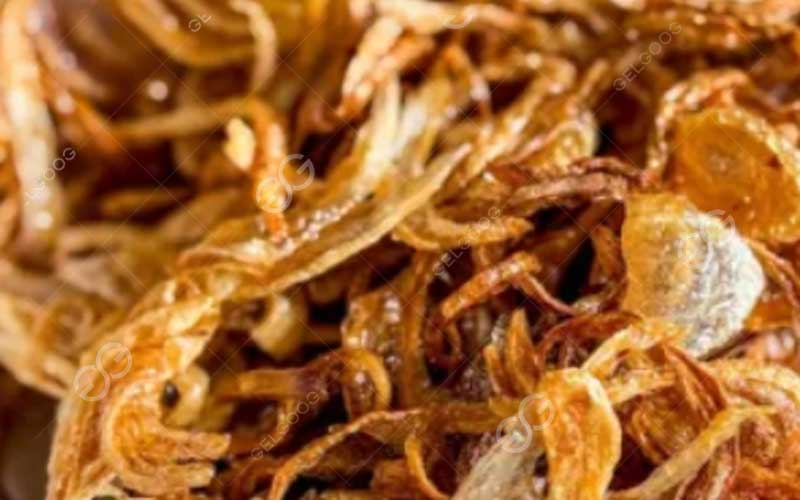
Main Processing Flow for Fried Shallots:
In industrial-scale production, the core processes for fried shallots primarily consist of: peeling → slicing → frying → oil removal. Each of these stages directly impacts the quality of the final product.
- Peeling: Prior to entering the production line, shallots must undergo peeling; otherwise, the quality of the finished product will be compromised.
- Slicing: The peeled shallots must be sliced into uniform, thin pieces, typically with a thickness maintained between 1 and 2 mm.
- Frying: Frying constitutes the most critical stage in the production process of fried shallots. The oil temperature is typically maintained between 140°C and 160°C, and—depending on the thickness of the slices—the frying time generally ranges from 2 to 5 minutes.
- Oil Removal: This step is designed to reduce the oil content of the fried shallots, thereby enhancing both their texture and shelf life.
Points to Note During Production:
1. Slice Uniformity
Inconsistent slice thickness can lead to uneven cooking—resulting in some pieces being overcooked or even scorched—thereby compromising the texture.
2. Oil Temperature Stability
Fluctuations in oil temperature are a critical factor affecting product quality, as they can result in inconsistencies in the quality of the fried shallots.
3. Oil Management
During the frying process, the cooking oil gradually oxidizes; therefore, it is necessary to regularly filter out impurities and strictly control the oil’s usage cycle.
Although the production process for fried shallots is relatively simple, every stage exerts a significant influence on the final product quality. With the continuous advancement of processing technologies—specifically the adoption of automated and continuous production equipment—both production efficiency and product consistency will be further enhanced, thereby supplying the market with products of superior quality and greater stability.